Sunday, 18 March 2018

Perdido Street Station


Oh my god, how do I even start reviewing this book?!  It is the maddest and most enjoyable science fiction book I have read since I was about 20, when I read A Player of Games by Iain M Banks and the most bonkers read since Geek Love by Katherine Dunn.
It's been a long, slow but brilliant experience.  The book is nearly 700 hundred pages long and after every 20 pages or so I've had to take a breather and say to myself.  "Did I really read that?  What the hell is Mr Mieville on?!"  
This is definitely one crazy read.  The equivalent of taking serious psychedelic drugs in book form.  To keep me on an even keel I have had to talk a lot about this book. It's definitely played with my mind, like it should, and I've had some seriously bad nightmares and have had to off load.   But ultimately it's been worth it.  
To me this is the work of a crazed genius. A guy who has successfully created a steampunk, Victorianesque, parallel universe of extreme horror.   
   This book is definitely not everyone's cup of tea but I know a few maddies out there who would bloody love it and thank you so  much Nicky Collins for the recommendation.  It is the first one of a trilogy, but to be honest I'm totally exhausted now and don't think I could read any thing more  for a while. I think my mind will end up frying, like lots of the characters in the book.
One of the joys of reading this book is that I knew absolutely nothing about what it was about apart from the map which looked a bit like London but with it's river called Gross Tar and a district called Smog Bend you knew it wasn't going to be a barrel of laughs living there. Well to put it mildly it was a complete dystopian hell.  
The city is populated by humans, remade humans, humaniods with scarab beetle heads and sentient cactus, yes, cactus, along with other species. Including the Construct Council, which is a newly formed hyper intelligent life force formed out of discarded, electrical components all  from a rubbish dump. (This force has no emotions at all.)  This creature has a brain in  complete contrast to the amazing  Spider, I loved the spider,  which weaves its beautiful web over all space and time fields, lives in all dimensions and speaks in a stream of consciousness. Yes, this book has a weird cast, and it would be totally impossible to put on the big screen.  
 The government of this city is totally corrupt and controls everything, literally from up on high.  Then suddenly the  theft of a little green caterpillar from a high security government research facility sends the entire city into meltdown when it pupates and turns into a psychedelic moth with entrancing wings which holds all sentient beings captive and then sucks their thoughts out of their brains leaving their dribbling husk of a  body behind.  
This one moth frees it's mates and they terrorize the entire city.  The sections with the moths is absolutely terrifying and I loved it.  These creatures also live in many dimensions and only come into this one when they need to feed on sentient thoughts. (They are like a supremely evil BFG.) 
Basically, this book is just about how a small band of misfit people (and a garuda and a frog like thing.) get together and against the odds kill the moths.  That's it really.  But my god, it's a long read to  finally get there.  This book is great and in places, because I am a bit sick, it's really funny. It's the work of a genius but it is damn intense and takes some work. Parts of it are a bit flabby and could have been edited but in the end I loved it and  highly recommend this book if you are into science fiction, find JRR Tolkein dull as ditch water, and want your brain to be literally fried. 

Thursday, 28 December 2017

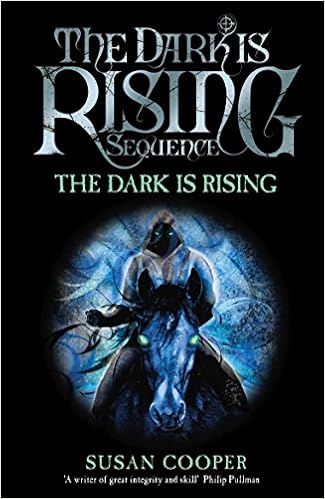
The Dark is Rising


Oh my god, what a joy to just sit and read this.  Pure pleasure.  I loved this book when I was 11 and just as much, if not more, at 46. I'm so glad that Philip Pullman's Belle Sauvage reminded me of this book and I'm sorry Philip Pullman, this is  better.   
The story is based around Anglo-Saxon and Celtic legends via a fight between good and evil forces all centred around a boy who turns 11 on the winter solstice in 1973. To make it even better it all takes place around my home walking patch the Thames Valley.  Yes, it's all a bit dated but for me it's as scary as The Hobbit  and makes  Harry Potter seem like Tom and Jerry. Unfortunately,  this book, like Philip Pullman's, just didn't have a good movie made from it so they have both suffered from marketing problems.  The cany JK Rowling retained director's rights over the movies so her unique vision has held the world bewitched for years. 
  It is an extremely descriptive book which describes the eternal battle of  dark and light.  It's based in a multi dimensional world and Will is the collector of 6 signs of nature to be held against the powers of the dark . The book takes place at the end of December into January, a time full of magic and melancholy.  And for anyone who finds this time of year a bit spooky, weird, depressing and exciting all at the same time...with the addition of  severe weather events, this book is perfect. 
    Susan Cooper writes like a dream. Her style is amazing and so many writer's of today must have started with the images formed by this book. In fact her writing style  is where this book excels for me. It's only as a walker that I realise that all the things I see now are so perfectly described in some novels.  This book describes the part of the world where I'm from with a  perfect dose of Christmas magic.

I have just looked at the artwork in the twitter feed for this book, which has been set up over the christmas period.  It's great.

Monday, 18 December 2017

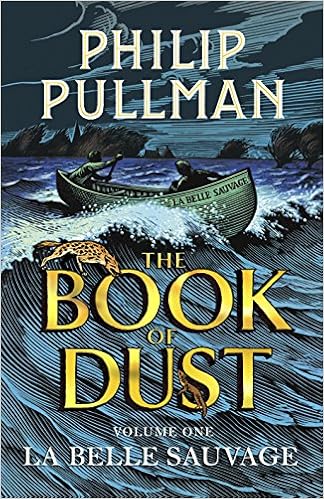
La Belle Sauvage. Book of Dust Part 1


Time to resurrect my reading blog.  It's been a long time and this one seems like a good choice to kick it back into action!  I read the last installment of Philip Pullman's 'His Dark Materials' Trilogy 17 years ago so this has been a bit of a wait.
This was a beautiful hardback book with wonderful cover and stars/dust all over it and I was so excited about reading it, but to be honest it never really instantly grabbed me as much as the previous books.  I think it was just much slower and much darker and in places a bit dull.  But over the last 24 hours I have totally immersed myself in the last half and I really loved it.  Even though it was weird and has left lots of things unexplained it was a great read, like a mad Greek adventure moved from the Mediterranean to the River Thames . 
This book takes place 10 years before the original trilogy and explains how the heroine, Lyra, got saved and placed in sanctuary in Jordan College, Oxford. Obviously my first joy is that I recognise most of the places in this parallel universe of Oxford.  It's a watery world and The Trout pub, the peacocks, Godstow Priory, Wolvercote,  The Duke's Cut on the canal and the side streets of Jericho all feature.  Malcolm, the 11 year old hero of the story who saves Lyra, lives in the Trout and has a boring existence until he finds Lyra hidden in the priory and he gets involved with espionage against the evil magisterium. Malcolm is just a normal run of the mill lad and his side kick Alice is just a grumpy teenager with attitude but by the end of the book they have survived some immense and horrific  adventures.  That's what I love about Philip Pullman, the heroic  kids are just all so normal yet they all end up being so brave and doing amazing things. He really makes me feel positive about what all kids could do if given the chance!  The only thing that did grate though is that as the story progresses and the kids paddle down the river saving baby Lyra, Alice loses her feisty edge and becomes more of a mother figure to Lyra and more in awe of Malcolm's bravery and strength. (Lyra's nappy changing and feeding could have been shared between the two of them!!) I think old Pullman is a classic sexist underneath it all!
I loved the great flood and the way Malcolm's canal boat just gets taken down the river as Brytain begins to sink under water.  The weird little Islands and odd buildings he comes across are very strange.  The fairie scenes, water giant scene and odd ghost like places are straight out of Greek myths. They also reminded me of weird sections in the life of Pi and the last book by Susan Cooper in The Dark is Rising Trilogy.  But the adventure section was all a bit rushed for me and to be honest a bit flat...coz it was just one mad hurried adventure after another fleeing from the horrible, twisted villain and OH MY GOD what a great villain.  
People in this parallel universe have animals who are attached to them, they are called their daemons and these daemons represent their souls.  The animals change form constantly until the child hits puberty and then takes on one fixed animal.  Reading about people's daemons is a highlight of these books. I love them and the villain's daemon was awful.  A complete terror and what she does is gross too.  I loved the complex nature of the villain because he looked pretty normal and was very friendly and charismatic but his animal daemon was absolutely hideous...a really interesting mix for a character!! He was quite a complex and  disturbing character to be honest and I'm looking forward to learning more about the history of this twisted and dark man in future books!  Infact this book poses more questions than answers them.  It is definitely not a stand alone book and hopefully the next installment will throw a bit of light on lots of loose ends. in fact there were far too many unanswered questions for me, which was pretty irritating.
But I'm glad I've spent the beginning of my Christmas holidays enjoying this book.  I loved that I knew most of the places. Greek myths taking part on the Thames as it rushes through the Chilterns will always be high on my list of enjoyable things to think about. I'll be on the look out for fairies and Old Father Thames the next time I am out walking!! 


Saturday, 15 April 2017

The Essex Serpent


Wow, I've been held in a trance!  I have read this book in less than two days and I have loved every minute of not being able to sleep or do anything much else, but enjoy this.   It helped that I ordered it from Bicester library and got a beautiful hardback copy. I always knew I wanted to read a massive hardback version of this book as I just love the cover. 
Weirdly , I have not been able to enjoy reading for almost a year now and I'm so glad that the spell was well and truely broken this weekend. 
This book was my perfect mix: science, religion, witchcraft,  the idea of freedom, poverty, love, friendship, magical  realism and the amazing natural world all mixed up into a story set in Essex and London in 1893. I can't really describe it apart from I thought it was really beautiful and rather strange. Unsettling and totally brilliant. 
really felt that Sarah Perry was writing in that era. There were no anachronistic moments but even so there were so many relevant topics to today.  ( How to treat your children when they are different to other children, how to care for  veterans from  the war in Afghanistan, dealing with unscrupulous landlords and the definitions of the undeserving poor.)    In fact in some ways this book was a bit too heavy on the 'worthy ideas front' but I still loved it and the characters were brilliant.  I can still see the village of Aldchester in Essex and the Blackwater river as it hit the North Sea.  The natural world in this book is another character and I just loved the passages about light, water, clouds, moss, fossils and trees!   The love story is heart-wrenchingly romantic and the sections on religion and science were just beautiful.  The weirdness didn't bother me either.  I kinda liked the illness/ madness  which took over one of the characters.  Her blue tinged world was straight out of a gothic romance. I'm  glad I read it quickly.  This book was like a drug to me and I enjoyed every minute. I don't know if I would have enjoyed it so much if I had read it slowly. Parts of the plot might have irritated me but like this it was one big joy and I recommend this book highly!  Warning...it is addictive and wonderfully strange.   Think I might read bits of it again! 

Wednesday, 15 February 2017

Any Human Heart

Totally enjoyed this and I'm kinda sad to have finished it. I really have felt that I have spent the last month travelling  with Logan Mountsturt through his life and diaries  from 1923 ( when he was 17) to 1991 and his death.  I loved his early life stories, which he wrote about retrospectively, and the mad games he played in his school with his  2 best mates. It all seemed lots of fun, but highly competitive and crazy. Logan's 2 mates were his family really and it's sad to see how the relationships with his friends change  over his lifetime. THey all had a full life of promise ahead of them, but like real life Logan did not always take the life chances available to him. WHilst at other times his life took crazy turns and great leaps. All in all  Logan's life was the life of a survivor.  A life with lots of sadness, great happiness, and peopled with just a few people who he truely, truely loved and trusted. THat's what upset me about this book, how few people truely were loved by Logan. 
I had a love / hate/ infuriationwith Logan through this book. Getting inside the head of a rather pompous, lazy and privileged teenage boy/ middle aged man is not a place I travel to often but I kinda enjoyed it.  Duringthe Second World War things did tragically fall apart for Logan and seeing him slowly build a life back for himself was an emotional read.  His diaries are just so honest and William Boyd sure writes beautifully in his voice.  PArts of his diary made me howl with laughter and at other times I was in floods of tears. I also liked the quirky famous people popping up in this book, ( he met Picasso, Hemmingway Ian Fleming, Virigina Wolf...but these characters were always just sidelines and always highly obnoxious according to Logan!) 
 Logan sure did travel, see the world and witness a lot. He was born in Uruguay, studied at Oxford, worked in France, , went to the Spanish civil war and was nearly blown up, wrote a novel, spied on Edward Vlll and Wallis Simpson. ( They were amazingly foul characters!), ended up in solitary confinement in Switzerland for 2 years because of pissing them off.  Returned home to some tragic news in London, went to live in New York, became addicted to drink, drugs and extra marital sex, ran away to Nigeria and got involved in the Biafrian War of independence whilst finding peace as a Uni lecturer. Retired, came back to the UK as a poverty stricken pensioner, who was living off dog food. started selling German Left Wing newspapers to students and inadvertently ended up almost smuggling nitroglycerine for some German Anarchists and then finally luckily( phewwww!) ended up in some sort of semi-peaceful existence in France.  All a great read! 
  Logan lives an interesting life but more by mistake than by anything else.  I'm sure if I had met him I don't think I would have warmed to him at all or ever even given his life story any consideration but underneath Logan's annoying persona there were absolute pearls of wisdom written by him in this book. The thing about Logan was he had a strong spirit and he survived.  Many of his friends didn't. 
 His was a life, underneath it all, an ordinary life.  A life full of promise, adventures, great happiness, regret and deep sadness.  ULtimately a life like any of us.
 A highly recommended read! 

Sunday, 20 November 2016

Rebecca


This is my ancient old battered copy which I have been rereading over the last month.  This book took me ages to finish.  I just haven't been able to read a lot lately.  It's the longest drought I've had in years. (Ever )   I blame it all on my addiction to '  an instant information vortex ' on my phone.  I have new, strict rules with my phone now so things are slowly improving .
This book was bloody brilliant but so vivid and unsettling, so whenever I closed the book it was as if Manderley and the characters were still clearly living in my head. JESUS! MRS. DANVERS!  Probably the creepiest, most mental and crazed character in literature!  What a woman!!  Just the presence of her skull like face in a window of a room was enough to send my heart racing! 
Everything about this house is so well described and it's all so damn ominous and creepy. The second Mrs De Winter really got on my nerves this time of reading.  What a wimp.  But she is so totally in love with her husband and so jealous of his dead, first wife, Rebecca that her feelings just swamp her.  Dead, beautiful, charming, thin, wonderful Rebecca is the main character of this book.  She breathes her way through every page of this book and has everyone under her control, even from the grave. I have to say, this time of reading it I had far more time for Rebecca and it was her husband, Mr de Winter, who had more of my anger, along with the demented behaviour of Danvers!  
The repression and undercurrents of jealousy are brilliantly described and some nights I just had to stop reading this book because it was just getting too much.  I was just screaming at wimpy, unnamed narrator to get a bloody back bone. But this is easy for me to say because good grief I would have wet my pants in the presence of Mrs. Danvers.  I haven't read this book since I was 18. Lots of it I remembered but not the ending in Mr Baker's house, which was  a bloody brilliant twist.  The ending was great and very classy, like a wonderful looped movie which made me want to instantly start reading the book again. Rebecca having the last laugh again. I love how Daphne de Maurier has written this book as a study of human jealousy.  She was a total genius of a writer and I'm in awe of her perception. Who was the bad person in this book? Who was right?  How quickly can happiness turn poisonous?
To be honest part of me really enjoyed reading this book slowly because I could really savour every single bit of imagery, every fear and  repressed emotion. Yes, this book is a masterpiece but not an easy read at all.  It's deeply unsettling and even flowers, architecture and the weather take on deeply significant roles in the claustrophobic atmosphere of Manderley.  
  I think modern authors, such as Sarah Waters,  might have written this book from different perspectives too and part of me would have liked to have seen Rebecca's, Danver's or Favell's viewpoints on the events but they are not there.  Al we can do is draw our own conclusions.  
An absolutely brilliant book!  
PS This book is sold on this cover  as a Love Story. This is totally wrong in my opinion. I think it is far more about jealousy, control and power.  But hey, maybe those words wouldn't have helped sell the book! 

Friday, 14 October 2016

Letters between Six Sisters

G

  The Mitfords were famous sisters from both pre and post the Second World War.  They were also members of the 'British Upper Class.' The sisters were well known society characters who filled  the pages of the press daily, Yet all sisters were highly individual characters who lived very interesting lives. People they knew included Hitler, JFK and Maya Angelou.  This is a collection ofsome of the letters they sent to each other during their lives.  GOssip, rage, sadness, politics, humour and family issues are all covered here. The family were bought up in the 20s in a run down Victorian mansion in Swinbrook, Oxfordshire and were basically left to run wild.  Their father was bonkers,  their mother was probably just knackered and depressed and Nancy said that if they had been poor they would have been taken into care from a very young age. 

The highlights for me were the extreme politics and how one family could become so polarised, and also how important letters and writing were to these sisters .  4 of them became published authors. 

THe fascist  sisters, Diana and Unity went to Germany, met Hitler and became besotted.  The reaction of the other sisters and family members is outrage and worry and Diana spent the Second World War locked up in a British prison with her fascist husband Oswald Moseley. Unity tried to commit suicide at the outbreak of war, failed and became like an incontinent  5 year old child who needed 24 hour care. (The bullet just lodged in her brain and didn't kill her.)  their Mother looked after Unity tirelessly until Unity died about 8 years later. (They were living on a remote Scottish Island at the time and it took the doctor too long to get out there so Unity died of meningitis at 33 , caused by the bullet still lodged in her brain) 

NAncy Mitford's jealousy and bitterness towards her sisters and her hatred for her mother, who she blames for not sending them to school and getting an education beyond being society wives,comes out in the letters. Her ascerbic  wit is clear and it's obvious that nobody really understand her and her lonely existance in Paris,living next door to this French general she loved but who didn't love her. Plus as Diana has her children Nancy has parallel miscarriages by her feckless, money grabbing useless husband. He refuses to divorce Nancy because he loves her money too much.  SHe makes a packet from her novels as well as from her family connections. Nancy is obviously the best writer of all the sisters but it's only in old age when she is alone, in permanent pain living on microwave dinners that her letters become really funny. Her sisters never told her that she had terminal cancer. (They asked the doctors not to share the information with Nancy, ) reading these letters has made me want to read more of her stuff. 

Pamela married then divorced, never had kids, became a world renowned specialist on the breeding of a  rare  type of chicken and then moved in with her Italian female lover. She isn't part of the story much but was known as the most non-maternal of the sisters but obviously quite caring as it was her whom Diana's sons lived with, whilst their Mother was incarcerated in Wormwood  Scrubs during  the war. The other  sisters often joked about Pamela being extremely tight, about her exploding pickled eggs which could shatter out of their glass containers at any time, and Pamela loving animals far more than humans. 

DEborah is the youngest and most level headed of the sisters.  She is like the rock of the family, the only one who retains friendly relations throughout with all sisters. Deborah never becomes political and at the beginning Nancy takes the piss out of her and calls her 'Nine'.  Because that is the age Nancy thinks she got stuck at. Deborah is proud of not being that intellectual or well read...but secretly she was reading and writing and in her later years she also became a writer like her oldest sister.  What I love about Deborah is she is the most privileged, marrying into the Devonshire family, but she seems to stay quite connected and able to laugh at herself.  When her brother in law dies, Deborah and her husband become the Duke and Duchess of Devonshire and Chatsworth house in Derbyshire becomes their property.  After the war this house is an abandoned run down country pile which has millions of pounds of death duties on its head to pay before they can move in.  The  Devonshire family were shite with money management, plus The post war  Britsh government really taxed the wealthy highly. ( Partly the reason why Diana and Nancy moved abroad.)  Anyway, Deborah became the project manager of Chatsworth house and after many years of work she got it back to a livable standard, opened up parts to the public and after 20 years was able to pay off the death duties to the government and finally move in to a part of it.  Yeah, she is still really posh and privileged but through reading this collection of letters you really get a sense of her great even handedness with all her extremely emotional sisters.  Plus she is the only one, apart from their Mother, who was willing to go to America and stay on the sofa bed at Jessica's house.  No other sister could even contemplate the horrors of sleeping on a sofa bed...let alone the awfulness of being surrounded by  uncouth, classless AMERICANS! 
Deborah died last year.  The last Mitford sister. 

Now Jessica, my favourite of all the sisters.  She becomes a communist in her teens, runs away to Spain to support the Republicans and then moves to the USA in 1939.  Her and Diana never communicate by letter as they are obviously polar opposites in political allegiance.  Jessica is the only sister to run away completely from her family and make a fulfilled life away from the Mitford sister badge.  She is highly political and becomes the only sister to work independently with political conviction.  She becomes an active member of the civil rights movement and a well known author in the States.  She lives a normal life, Invites her sisters over to stay but writes that they don't have any money and they will have to stay on the sofa or in cheap nearby hotels.  Only Deborah and Mother take up the offer and both love the trip! Jessica becomes a journalist and a writer, finally releasing a book about her and her sisters.  This obviously causes a wedge between her ,Nancy and Diana. But Jessica is also well known for writing a book called 'The AMerican Way of Death'  and weirdly I've just seen online that David Bowie cited this book as his all time favourite . Movingly Jessica is the only sister to make sure that their Mother had a comfortable house to live in during the end of her life. She actively cared for her mother even though she only ever saw her once in the States.  Plus Jessica's father cut Jessica out of his will.  He hated that his daughter was a communist and was ashamed to have a RED daughter. This was the time of the communist witch trials in the States and Jessica could not leave the States because she would never have been allowed back in at the time.  I have also just found out that JK Rowling named her daughter Jessica out of respect for this woman. 

Reading letters by rich sisters from the British Upper Classes isn't everyone's idea of fun but what I realised is that the back drop of society in these letters is amazing plus these sisters sure are characters!  You couldn't make it all up!  Hearing  about how Deborah's car was turned over by the locals in Bakewell with her in it and the abuse she got was interesting.  Plus these women were all products of their time, totally subservient to their class, their husbands and their appearance. Infact lots of these letters make me really glad that I was out alive at this time.  Life was obviously tough for all women at this time, and surprisingly still really  tough for these Upper Class women too.  Emotional release is apparent in these personal letters but even so there is always the stiff upper lip to retain even within letters written to your sisters and this made me mad and sad! 
  The emotions of losing their one brother in the war, Unity's attempted suicide and end of life care which was pushed totally onto the shoulders of their mother, the mental illness of their father, the drudgery of their mother's life with Unity,  their frequent miscarriages, their father's affair with the maid, their awful huge cold damp childhood house which was falling down around them, their father's refusal to educate them.  These things were only ever hinted at apart from Nancy who got really angry about their awful childhood. Nancy never really found happiness apart from within writing and when buying both furniture and haute couture clothes.   The man she was obsessed with never loved her and she could never move on from him.   I didn't feel jealous of any of them apart from maybe Deborah for having complete control over the rebuilding and day to day running of beautiful Chatsworth House and Jessica for finding complete independence away from everything in Oakland California! 


 These letters were surprisingly moving and a great backdrop to the changes in British society between  the 1920s and the year 2001. 

Thursday, 29 September 2016

The Devil's Star


This book by Jo Nesbo was awful. Worse than awful.  I have been trying to read it for about 3 weeks now and getting nowhere fast.  Infact reading this book has put me into a deep reading drought.  Never have I felt so uninspired to pick up a book. I should have ditched this book weeks ago but never did because I was stubborn and stupidly believed that it might get better.  This book never did. It was complete drivel and this morning, after I fell asleep with it on my lap in my daily traffic jam to work, I decided to ditch it and happily left it behind on my seat. Walking to work I felt great, like  a weight had been lifted from me.  It had, I no longer was carrying this pile of crap round with me. 

Sunday, 11 September 2016

I, Claudius

        Q

What a great read.  Had real fun reading this.  OK! It hasn't all been easy going,parts were a bit boring. This is not written in an explicit style like Game of Thrones but hey, this is where Game of Thrones, the Borgias and the Sopranos all get their inspiration. Life in Rome at this time had it all going on! Constant Wars,  treachery, murder, incest, poisoning, banishment, feeding dead prisoners to the hungry animals in the Coliseum  pit, turning your horse into a top politician, insanity, orgies, poisonings, physical disability, recessions,  deranged power crazed Grandmothers and wise whores. 
All of the kinky daubauched stuff is implied and not actually described MUCH but it's all there and what fun Robert Graves must have had hiding behind the secret diaries of Claudius. The narrator of this story. An intelligent,low profile member of the 'family' who manages to keep a low profile by hiding behind his stammer and his physical deformities.  One of his great teachers, Athenodorus, told Claudius as a boy to ham up the stammer and the limp whilst in public as this acting would keep him alive.  This was great advice and Claudius ends up being Emperor after the insane 4 year rule of his nephew, Caligula and the previous rules of his Uncles, Tiberius and Augustus. These two emperors were both under the control of evil Grandmother Livia.  She is so evil she is almost funny!   She kills off anyone who she thinks is a threat to her family rule but yet, she keeps the empire under control and seems to run things fairly well from the sidelines in my opinion.  It's only when she dies and Caligula takes over that things go completely bonkers!  What a brilliantly insane guy. Surely all the shagging he does of anything with a heart beat  is just beyond ridiculous and as for cutting costs by feeding prisoners to the hungry animals in the Coliseum  pits and turning his beloved horse into a revered member of the consel is just hilarious! I can't believe that he was able to be Emperor for 4 years until he was assassinated.  
The book ends with Caligula's death and Claudius ready to take over the reins but I need a break from Ancient Rome now and part two will have to wait! Plus Robert Grave's 1930s writing style did get a bit turgid at times!  The complicated family trees were a bit of a nightmare, I spent most of my time flipping to the crap family tree at the back trying to work out who is plotting against who, who is shagging who, who is poisoning who .etc.   my Mum has told me I must watch the BBC 1970s adaptation. She said it was pretty raunchy for the time. One night when I want a laugh I might try and find it out on YouTube. 

Wednesday, 24 August 2016

Plague

This book was crap, so crap I don't want to waste time writing about it. It could have been so good but failed completely.  Awful. 

Sunday, 14 August 2016

Books 3 and 4 in the Neapolitan series.


I finally finished books 3 and 4 of Elena Ferrante's series last week and I have been a bit slack about writing them up. To be honest I really enjoyed Book 1 and 2 the most. As the women got older their lives just began to rush by and Elena made more and more errors of judgement and it became clear what a selfish woman she was. Her lover and her book launches meant far more to her than her own children. But hey, I'm being a bit unfair, male authors would definitely get away with behaving like her. I just found reading about her behaviour quite difficult to take in.  Having invested quite a few weeks reading about her and her grafting to get out of her difficult life in the Napalese gutter it was hard to witness her mistakes as she got older.  
Things never really picked up to be honest and the last book was pretty depressing for me.  The real author of this book,  Ferrante, is amazing though; I really believe that she has captured what life is about, a great belief in yourself and your talents when you are young and then as you get older life just whizzes by and nothing really lives up to your expectations.  You just keep on making mistakes and your kids don't appreciate your efforts. All very true I think for the majority of people. but I have to admit, pretty depressing to read  about in a book. I want to read more uplifting stuff really or something with an under current of black humour, which this series definitely didn't have!  
Having invested over 2000 pages of reading effort into these 4 books I'm glad I didn't buy them and just got them out the library. I think Ferrante writes beautifully and some of her descriptions just seemed so honest.  especially when people were having personal breakdowns but for me there are too many little things that annoyed me.  The beginning ( as you never find out about the opening scene until near the end of book 4, which cleverly locks you into having to read them all.) and the ending.  The ending is clever but far too ambiguous and that just annoyed me. 
I think slogging through these has put me into a reading slump now and I am just gonna focus on watching The Olympics. 

Tuesday, 19 July 2016

The Story of a New Name


Woah, I have been on a mammoth reading marathon since I found out yesterday that this library book has been pre ordered and must be returned today. I read all evening and most of the night and finished this off.  To say this series is addictive is an understatement  but I m not sure it's everyone's cup of tea.  Part of this book was really slow but I loved it...like life in all its glory and all its dullness.  This is the second in the series and again the only thing I really disliked was the ridiculous cover.
  Lila and Lenu's story from the ages of 16 to 23 held up against their claustrophobic life on the rough streets of 1960s Naples. I loved the descriptions of their friendship and their loves and their hatreds and jealousies. Plus the slow disintegration of Lila's marriage was brilliantly told  This book could be seen as extremely depressing and in parts it is. No one is an angel.  But weirdly I also found it uplifting and comforting because Farrente writes so honestly and I really believed every single scene in this book.
 Neapolitans living in poverty, scraping a life out, building up businesses, worshipping money, men getting jealous and beating their 'women' into shape, getting involved with the money lenders and the Camorra, memory versus reality, idyllic holidays on Ischia, people trying to escape the grinding poverty through both legitimate and illegitimate actions, snobbery and inverse snobbery, love and lust, the power of control, the idea of what intelligence actually is, and the feeling of deep insecurities are just some of the human conditions covered in this book!  
Yes, I devoured this book and I have to start reading the next one straight away.  The strange thing is I know this book isn't perfect.  Not all characters are well developed and there are lots of characters! plus parts are really quite dull but weirdly for me this worked too. It's just like life, lots of dull stuff and then suddenly things spark and lots of exciting and mad stuff suddenly takes over. Great read. 


Sunday, 17 July 2016

Wild


Wow, I loved this book.  What a great read.  I have put off reading this for a number of years because I thought for some reason I would find it intensely irritating ...what with all this lost to found nonsense and a complete novice walking literally a thousand miles. But how wrong I was!  This was a brilliant book and I loved the honesty of Strayed's writing.  For a start she wasn't a complete novice, she was fairly fit,  had lived like a hippy all of her childhood, she was outdoorsy, and knew how to camp, tie knots and live a simple life.  The only thing she hadn't done was walk for days  on end , alone with all her belongings on her back. Her description of her life falling apart before she started the walking and the trauma of her mum's death, her family break up and her divorce were really honest portrayals but her way to cope was a choice between becoming a heroin addict or getting back into the outdoor style life of her happier childhood.  She luckily decided on the latter, and what an adventure she had.
I loved reading about her initial planning with her packed boxes being posted onto stations ahead.  Her inability to make her pack smaller. The pain in her feet, hips and mind as she had to keep walking up and down the range of mountains on the Pacific Crest TrAil.  I loved her descriptions of when she met bears, rattle snakes, foxes and hideous frogs. The great  and generous people she met on the trail, both locals and fellow walkers and the infrequent unfriendly people she bumped into too. Her vulnerability is clearly expressed.  She makes some big mistakes, especially when she runs out of water and the tank ahead is also empty and her shoes cause her continuous pain.  This was a hard core adventure.  Not for the faint hearted, but I have to respect these hard core adventurers.  They sure have guts to go out walking in extreme snowy conditions with only an ice pick to help them stay safely attached to the snowy slopes. Infact Cheryl did have to bypass a section of the Sierra Navada range because it was so dangerous with all the snow...still there in May, June. 
I also loved learning about a trail I know nothing about. There was a map of the trail from the Mexico border, through CAlifornia, Oregan and Washington State. I learnt a lot about the geography of the region.  I now know about Crater Lake, the deepest in North America and how the Sierra Nevada range changes into the Cascade Range and how this trail was created in the early 1970s. I watched a few YouTube videos giving advice on how to walk the trail...you really need to plan ahead and be hard as nails..it's the equivalent of walking up and down about 6 Mount Everests. But I could really understand the beauty and power of what walking can do.  On a much simpler level it has really helped me  and my sister, just getting out and about into the Countryside.  I'd never be able to do this but it's great to know that the opportunity to dream is out there and big respect to Cheryl Strayed for writing such an honest and beautiful book about the power of getting out into nature and just walking! 

Saturday, 2 July 2016

The Little Red Chairs


Woah...this book was full on.  NOT an easy read at all. I think one section of it contained some of the most brutal scenes of violence I have ever read. (All this written by a woman in her 80s!) This book was not a holiday read, so ending up with it on my holiday was bit of a mistake.  I really couldn't get into it until on the flight home.  I felt suitably in the mood then!
This book was amazing on many levels and the whole feel of it was ultimately uplifting and positive even though parts of it were really grim and hard to read.
This book is a book of two halves.  The first half is based around a tight knit Irish village community, when suddenly a foreign man appears out of nowhere who claims to be a healer.  He manages to fit into the community and locals are charmed by him and one of the local woman starts an affair with him, really in order to get pregnant because things are not happening with her husband.  ANyway, it suddenly becomes clear that all is not good with this healer  guy.  He is actually one of the main protagonists of the BOsnian war and is responsible for mass murder of Bosnian Muslims and the siege of Sarajevo.   He has been in deep hiding for years and when things finally come out serious revenge is taken out on the innocent, yet pregnant, victim Fidelma. To me Fidelma personifies what happens when unexplained evil things suddenly happen.  How Fidelma and other people react to these horrible and traumatic events is the basis of the second half of the book. 
    THe second half is about  Fidelma's new life as a runaway in London.  Here other low paid workers from all around the world, who have all come looking for work in London, help her out ( or hinder her progress accordingly. ). She meets lots of badly paid immigrants,all trying to make ends meet in London and there are lots of different stories of their lives, all told in the first person in different varieties of broken English. As a teacher of English to non- native speakers I really could hear the voices of these people as they tried so hard to keep their dignity and sense of purpose in the underworld of their London existence. 
This book was not perfect in many ways.  Parts of the story were clunky. Often it didn't flow because the voices would change so often. Also Fidelma's cathartic visit to The Hague to see her mass murderer, ex-lover on trial just didn't work for me. I also thought the author was sometimes trying to cover too many 'issues' in one book. 
 But I have to say that this is my first Edna O Brian book and she is one hell of a powerful writer.  What I liked was her ability to be so personal and intimate one minute and then she could suddenly shift her focus to a more global perspective. Her writing is beautiful and her sense of place was amazing, especially  the Irish countryside and the bleakness of lonely lives In London.  Parts of this book were incredibly beautiful, others incredibly violent and lots of passages were sad but ultimately this book ended with a sense of hope and love towards our fellow man.    It was a tough read in many places but all respect to O'Brian for making me think and taking me on a roller coaster of a read.  

Tuesday, 14 June 2016

From Heaven Lake


Wow, what an interesting book.  I picked this up from the 50p rack at the back of Sainsbury's and I'm glad I did because I have checked online and it is now out of print.  Vikram wrote this travel book in 1983 when he was finishing studying in Nanjing, China.  He'd just decided to try and get back to Delhi via a land route starting in Xinjiang/Sinkiang in the Far West of Northern China and going through the flooded deserts of Far Western China, (it was the short lived monsoon season.)  into Tibet and then a difficult crossing via foot into Nepal. Not many tourists are allowed to go out of China this way and it was quite hair raising. And then finally he caught a flight back from Kathmandu to Delhi. 
I love the way Vikram writes and here he really makes you feel you are travelling with him in a distant land in a time which has now vanished for ever.  Tourists had to use special tourist exchange vouchers.  I was intrigued by this strange parallel money system and had always wanted to know how it worked. And weirdly when I was in the British museum last week I randomly found one and took a photo! I'm such a geek.


Vikram could speak Mandarin and was able to get a seat in a massive truck crossing Western China to Tibet and the wonderfully uncomfortable journey with the chain smoking driver and the young lad who just loved reading comics, was really vivid. The driver was an interesting character who unlike many of the Han Chinese didn't hold any particular negative feelings towards the Tibetians.  He was a practical guy who seemed totally at home in his rattling truck.  His ancient truck made at least 15 different noises but as soon as a16th noise  joined the din he would instantly stop and mess about with the old engine.  Windows didn't close properly and there was no heating in these huge trucks.  Food was mostly crackers and raisins and people initially seemed quite off hand with Vikram as they couldn't place his nationality. In Urumqi he was taken as a local because in this area of China they are such a mixed community.  China was still a very closed country in the 80s just coming out of its dark period of the Mao Cult, the cultural revolution and the imprisonment of the Gang of Four. People were wary of foreigners as they never knew if they were being watched or not. But often Vikram was treated so well. A shop assistant restitched Vikram's 'Muslim' cap to make it stronger.  He wore this cap so that he fitted in more in far Western China. People went out of their way when he lost his bag off the back of a truck and officials could go from being complete beaurocratic nightmares to inviting him home for dinner with the family. Lots of extremes.
Finally Vikram made it into Tibet. His description of the scenery is amazing, Lhasa  was in the process of being completely eradicated and changed into a far flung generic  Chinese outpost. Many Han Chinese were unhappy being posted in Lhasa, they were all homesick and just wanted to go home. Infact no one seemed happy with the political situation at all.  Neither the locals or the Chinese. That's what I liked about Vikram's style he never judged anyone. Everyone was just a product of their environment and friendliness and kindness could be found everywhere...apart from one American tourist who was rude to him because she never realised he spoke English. 
 The right to pray in the Potala had just returned but many other Tibetan monasteries had been totally destroyed between the 60s and 70s.  Vikram could only talk to locals who spoke Mandarin and many Tibetains didn't, but the people who did were mostly honest and open. His experience within the monasteries is so well written. A riot of colour, smell and sound. Also he describes the  foul smells so vividly. There is one road with a big green puddle in it, in which a dead dog is rotting and everyday he passes the dog is in a further state of decomposition. Urghhh!! 
One chapter really affected me.  It's a short description of a Tibetian religious death riitual called a sky burial.  At sunrise the dead body is expertly chopped up and then personally fed to the waiting vultures.   All of this happens whilst the family respectfully watches.  This chapter was both fascinating and stomach churning. The ground is too hard for burial and there is a lack of wood for a more common Buddhist cremation so this is the best way of getting rid of dead bodies and it made total sense to me. This practice, like many other things in Tibet, had been forcefully stopped during the cultural revolution but during this time in the early 80s things were beginning to slowly change and local religious practices were suddenly resurfacing again. I wonder how rites like this are viewed now , 33 years later?
VIkram's final leg of the journey over into Nepal is also fascinating.  He has to hire a Sherpa guide who takes him up a mountain down a really steep valley, along river banks and then finally a border guard pops out from behind a tree and tells him to open his bag because he is now in Nepal. He tries to steal some of his stuff but his Sherpa guide helps him out.  All of this trekking happened because the friendship bridge, which connected the two towns on the two sides of the border, had collapsed. He had to get special permission to cross this border but luckily through patience and diligence he managed it. 
He noticed that there was a woman washing clothes on rocks in the river and it was obvious that she was totally unaware that some of her clothes were in Nepal and others in China. It's little observations like this that I loved so much! 
Yes, this book was really great, partly because I felt like I was travelling with him. I also loved his observations about people and also the bigger observations he made about his country, India, and China. The two massive countries really have nothing that binds them or unites them even though they are so close. Geography and politics  have isolated them from each other. They have no common history or culture, apart from Buddhism. The Chinese and Indians don't influence each other yet their civilisations and food have completely dominated the cultures of SE Asia and much of the world. 
PS I enjoyed this book so much I read it twice. Straight back to the beginning once I had finished! Haven't done that for years!! 


Tuesday, 7 June 2016

My Brilliant Friend


Wow.  I have read this rather long book in less than a week.  The story just sucked me in and I just had to keep reading. it's written by an Italian author and I have since found out is a real big seller and no one knows anything about the author.  (There are rumours that he is writing under a female pseudonym.)
Anyway, I really  enjoyed this book. It's all about  the friendship of two girls called Lenu and Lila and charts their relationship from when they are pre school all the way to sixteen. These girls are born into a poor and hard life in post war Naples and things are tough. ( It was interesting for me to read this as a parallel life to my Mum's, as these girls were born in the same year. )
Life is grim. There  are ghosts and problems in families,which the girls can only sense because they are too young to understand the issues which haunt the families.  These problems are based on political alliances and money made and lost during the Second World War. But these problems hang like spectres over the families.  
This is a hard life as seen through the eyes of two very intelligent young girls, but girls who come from very different families. Not that parents play a big role in this book.  They are weirdly absent from much of it. 
 One friend leaves school after the  primary years whereas the other continues right through school.  But what got me was the honesty with which Elena Ferrente writes.  The friendship of these two girls is vividly bought to life and their inner secrets laid bare.  These girls both love, admire and are jealous of each other,yet are both completely dependent on each other.
 The men in this book are mostly macho brutes who just lust after money and power and that also means getting the girls they desire.  Looking and playing the part is all that matters to these deprived young lads. These guys have been abused at school, home and work and violence is all they know, so violence is what they show.  Infact lots of the way girls are treated in this book is shocking. women are nothing more than a status symbol and are bargained off for marriage via family meetings.  ( can't believe this is a European city less than  70 years ago!!) 
  This book is ultimately about how these two young girls learn to see how the local men view them ,the corruption and hard lives  which lay ahead of them and how both react so differently to these realisations. 
Yes, this book is pretty bleak and not exactly a laugh a minute and I'm not going to rush out to get the next one in the series , But I am glad I read it because there was just such a strong honesty of how girls behave with their really close friends.  I loved it but also found the number of characters annoying. No other characters,apart from the girls, are really developed that well but there is a long cast of people and I was constantly flipping back to the front pages to find out who was who. But hey I still whizzed through it!   This book was like a drug for me! 
 PS. I hated the cover.  Horrid freaky bridesmaid dresses and not really suitable for advertising the content of the book either. 

Monday, 30 May 2016

Silk


I read this yesterday.  It was a thin book so it didn't take long.  I'm glad I read it in 1 sitting because I managed to stay in the atmosphere of life in 1850s France and Japan. It's all about a married French man called Herve, who has the job of buying silk eggs/worms/cocoons for the silk weavers in his French town.  As soon as the silk eggs in Northern Africa become diseased he is forced to take the gruelling journey to Japan. The long journey is described about 4 times during this book for the 4 times he travels.  The journey might be long but the trip is quickly described in one paragraph each time. Because this story is not about travelling, it is about his obsession with the mistress of a powerful clan leader in Japan.
The couple can't communicate or directly touch each other but through slight erotic actions it becomes clear how much they both lust after each other. She manages to hand him a short letter which he can't read until he gets back to France.  There is one Japanese woman nearby, who also happens to be a prostitute, who lives in Nimes. (Both Japanese women in this book are whores.  Probably the only paid professions for them at the time. ) his desire to go back to Japan begins to take over his life.  He is in a state of loss for experiences he's never had.  His boss and his wife try to find out what is wrong with him but nothing is shared. Each time he goes back to Japan things change a little with really atmospheric images of ways to show their love/ lust for each other.  But the last time he goes Japan is in the middle of a civil war and the silk worms are nowhere to be seen. A young boy risks his life to take Herve to her and he goes back to France without both silk worms and her.
All through this book there are two other characters.  Herve's boss and Herve's wife. Herve's boss is brilliant and even though he is one of the richest men in the town he is the least bothered by the money he creates  and just wants to hear about Herve's travels. He is quite an eccentric.  Herve's wife plays a back seat role. Well kind of...
I enjoyed this.  Reading it in one sitting was totally absorbing, like being in a fairy tale. Sometimes it was a bit pretentious and other times not.  ( it is translated from the Italian.)
 I liked the simple links to history.  The Brits  selling weapons to the Japanese for their imminent civil war, ( first at grabbing a lucrative gap in the  newly opened Japanese free market.) and Pasteur in France trying to work out how to stop locally cultivated silkworms from dying: Little details in the vast world of science, love and war. 
Plus the ending was a surprise. It made me cry. ( or maybe I was just over tired.) Today I have been thinking about this book more than I thought I would, and I some of the beautiful images will stay with me for a long time. 

Friday, 20 May 2016

The Girl Who Played With Fire


I read the girl with the dragon tattoo years ago and suddenly realised I had never read the sequels so suddenly last week I decided to finish the trilogy.  OK These books are now DATED.  Reading this seemed so old fashioned because, ironically,  at the time, Stieg Larson was trying to be so trendy. but even so it was a fun read.   I love Lisbeth Salander and I'm sure she must have been an inspiration for my all time favourite Scandinavian sleuth, Saga Noren. ( Danish autistic super cop from the Bridge on BBC 4) 
This is not great literature in any way.  Infact lots of this book is extremely dull but then suddenly out of the blue, every 40 pages or so, something really bonkers exciting happens and about 7 new characters hit the page and lots of death and/or sadistic behaviour happens. The story line is ridiculous, the characters are mostly straight out of a James Bond  movie but  Stieg Larsonn had a lot of time for Lisbeth Salander and every page she is on she shines out as a beacon of a young, feisty woman fighting against the system. She has anger, balls, and intelligence but she is is so, so, so vulnerable.  Her story is even more poignant as I think about the abuse which in reality many young vulnerable women have to deal with. This book is not outrageously violent.  Infact it's pretty damn BORING lots of the time but you're still weirdly hooked as you happily read about everyone just sitting about drinking about 100 coffees a day.   Another thing I didnt understand is why Lisbeth Salander had a boob job in South America in the first few chapters, it just seemed totally unnecessary. But the ending is a total hook for book 3.  I feel like I have to read it now.but I'll hold off for a bit, if I CAN!!! 

Sunday, 8 May 2016

The Greek and Roman Myths

Wow!  I totally enjoyed this.  It has taken me an age to finish because it is such an informative book and many parts I have had to reread to get my head around plus I didn't want to rush it.  bloody hell, really interesting and funny too.  
When I was at Primary School I was fascinated by the Greek myths and lapped up lots of the kiddie friendly versions but I always knew I was being fed a child friendly version but as soon as I went to secondary school this kind of 'stuff' went  off the agenda.  It's so great at 44 to finally reconnect with my 10 year old self and get back into the nitty gritty of Greek myths. It's such fun to finally see it all as an adult and really think about what these myths meant to the ancients. 
 They are marvellous; thought provoking and mental all at the same time.  This book wasn't the stories but rather an analysis of the whole SHABANG. An overview of the main points.  It's from the library but I really think I need to buy it.  
My favourite parts were learning that LOVE , ie Eros and Aphrodite,  are two of the first created gods. 
Eros was the first proto-God to emerge from Chaos.  Cuddly cute Cupid is a Roman invention but Eros embodies not only love but the entire reproductive system. . Aphrodite ( Venus) is the oldest of the  major gods and she was born from the chopped off penis of Uranus where it seeded in water!!!  Wow, no woman involved in Aphrodite's birth...she's pure cock!  
I love how brothers marry sisters, dads eat their children and their pregnant wives and then regurgitate them or in the case of Athena, her pregnant, water nymph mother is eaten by her dad Zeus and then the God of fire, Hephasteus, comes and chops open Zeus head and out walks a fully formed adult Athena.  A woman who will be a god of both war and wisdom!  
I also enjoyed reading about the trials of Theseus and Heracles and the myth of the Queen who fell in love with a bull, managed to dress up like a cow and got pregnant.  Her hideous offspring was the minatour which had to be hidden away in a maze.
So much in this book, too much to remember, but for someone who hasn't really connected with the myths for over 30 years...a lot of fun!! 


Friday, 6 May 2016

The Runaway


Well I have finally read a Persephone book!  I have 6 of these beautifully designed books on my shelf. But so far I just haven't ventured near my small pile of Persephone books. INfact it's so ridiculous, I actually got this book from the library!   Yes, the ridiculously tiny 'make do whilst the city centre is demolished and rebuilt' library in Oxford city, with the most amazing books in a tiny space! 
This is a children's  book written in 1872.  It went into oblivion until1936 when an artist, who had loved it as a kid, got it reprinted.  in the 40s it was pulled again until Persephone revived it in 2002. 
I really enjoyed it.   Infact it was a great read for be being stuck in the sun on OXford Parkway station.  All the trains were delayed, I soaked up the rays and finished this.  Infact Parkway comes up trumps for places to get stuck at in the sun! 
This book is about a young bored teenage girl who suddenly has to hide a runaway in her house.  Olga has runaway from school as its boring and they feed her dog meat.  The runaway, Olga, is one of the best characters ever! she is full of spirit, life, energy and quirkiness.  I loved her.  OK! The plot is of its time and a bit lame in parts but it is still bloody funny.  It is not full of prudishness, sexism or constraints, It's just two  girls having a bit of a laugh and pulling the wool over the eyes of the adults. It is a bit leftfield though and I think written p before its time. One of the girls  is as mad as a hat and leads the other 'astray' into a world where she has to lie, yet both realise they love deceiving the adults.  Pretending to be a ghost, alarming the butler and almost killing the governess off.  Getting on the roof, being a gem thief, hiding in dark cupboards, pretending to be the ghost of a horse and dressing up as an old woman are all part of this book. Plus the story proves that adults in positions of power are not always right.  Here is a great example of  young women not just bending to the face of authority but actually questioning what justice is and who it is for.  It is not a preachy book at all,  unlike The Water Babies, which was printed at the same time, but is full of humanitarian wisdom and fun, which I really liked.  
An interesting read.