Saturday, 27 July 2013

They Were Counted by Miklos Banffy


Wow, what a book! I loved this and I have to admit when I lost my Smart Phone part of me was thinking, never mind Jane, now you have more time on the train to read this instead of playing around on the Internet.
I found this by accident on the Kindle store.  It's the first part of a trilogy based around the last days of the Austro-Hungarian empire, 1904-1914, ending with the assassination of Franz-Ferdinand in Sarajevo.  To be honest I thought it would be a bit slow and heavy.  But no way, it has been amazing and this morning I downloaded the other two parts.  I am addicted! 
I have successfully  been transported to life in Transylvania and Budapest between 1904 and 1906. the main character is a lovely, aristocratic naive guy who has returned back to his Mother in their castle and how he falls in love with Adrienne, who is married to a sadistic, evil bastard.

Things I have learnt thanks to this book:
How women in this society wear the metaphorical trousers and run the households like a tight ship. How men can lose everything over the gambling tables.  How to entertain a big-wig at a game shoot who can't shoot straight. How to organise a duel.  How to save villagers from pay day loan sharks.  How to camp in the forest with the gypsies. How poor men manipulate rich women of marriageable age for money.  How servant girls are so easily abused.  How women are nothing more than their husbands possessions.  How to have a successful, secret, illicit affair.  How to trash parliament and have a riot.  How to manipulate the weak (both poor and rich). What to wear to a Ball and what to drink until 6 in the morning if you don't want to collapse in your own vomit.

Yes, it's like a funnier and wittier War and Peace.  A book full of people and life and humanity.  I have laughed and cried and I can't believe that this book is virtually unknown. I suppose Austro Hungary 100 years ago doesn't interest many people here. But it is the characters and stories which are the great pull!  Yes, I loved it but I am a true romantic sucker for castles, duels and doomed love stories.  

Here is a good review, which is exactly my opinion too.


Friday, 12 July 2013

State of Wonder

This book did  take a while to get into but as soon as it settled into being based in the Amazon Jungle it was fabulous.   As most people know, I do like a little bit of travel, but the Amazon has never been high on my agenda, and after reading this I can see why!   Ann Patchett really does make you feel like you are there with the doctors and the researchers, totally out of their depths in this alien environment.  Surrounded by the suffocating trees, the local tribes,  the dangerous waters and the massive snakes that can appear from anywhere.  Not to mention the psychedelic mushrooms, the tree eating women and the  mysterious death of a scientist. You really feel part of the action!
  This book is a mixture of a modern Heart of Darkness and a block buster fantasy fiction movie. I love the way Ann Patchett tells her stories.  She really pulls you in and you can see everything so vividly.  I  feel like I have been out in the Amazon with them all! (Much cheaper than a plane ticket.)  She makes it all so unglamourous and you can almost smell the sweaty bodies and feel the stifling heat!  You really get into the heads of these scientists and doctors who are being paid secretly by a pharmaceutical company  to find new drugs.  The secrets which they do find  are  amazing and pretty controversial.
I'm not going to write anymore because I don't want to ruin it for anyone who wants to read it.   Stick with the first 100 pages...the momentum soon picks up!

Wednesday, 10 July 2013

Major Pettigrew's Last Stand

I'm a bit stumped with what to write about this book.  I took it on holiday with me and it should have been a quick read but it ended up being in my bag , living in there, for the majority of my trip!!  But hey, I'm not sure if this book was for me because I think it was written primarily for non-Brits or ex-Pats with a strong cliched idea of what village life in England is/was about.
 I just found all of the characters totally and absolutely unbelievable.  In fact, apart from the main two characters  everyone was  either a caricature of little Englanders from the 1950s or 'evil' Muslims dropped into the book for dramatic affect.( Major Pettigrew should have just shot his annoying son by page 10 and done us all a favour.)
 I didn't feel any empathy for any of the characters and even though it was sold as a Love Story it all seemed  totally sterile and soulless to me. When I found out the Major was only 68 I nearly spat out my Croatian beer, to me he seemed at least 87! When one of the village kids was told off for playing with a kid from a 'One-parent-family'  I almost spat out my Bosnian sausage!   Was this author for real?  Was this really written just a few years ago?!  I then found out that the author hasn't lived in the UK for years.  It showed! This book was described on the back as being 'quirky and full of charm'.  Bullshit, it was as dull and dank as village ditch water.

Monday, 27 May 2013

Alex's Adventures in Numberland


Bloody hell, What a book!! 
 I did a maths degree over 20 years ago and I often wonder why I did.   But then I read a book like this and it all makes sense.  This book was perfect; full of interesting history, facts and ideas that made my head spin and yes, the pure beauty and wonder  of maths shined through. (Really, it did!) 
I haven't just read this book I have thought about it for days.  I feel like I have re-connected with an old weird friend who I last chatted to over 20 years ago. I think it's both  the humour and the passion of the writer which makes this book outstanding for me. Yes, parts of it are funny because mathematicians through history are completely bonkers.  I grabbed it off the shelf in the library at the last minute and the first thing I am going to do after I return it is buy myself a copy.

It starts with the history of counting and how some tribes in the world have no numbers greater than two in their language.It talks for a while on different counting systems and how an ancient people from Babylon had a number system based around 60.  (They left us with the system we use for time.  60 minutes in an hour.) It moves on to the first  writing, which was accountants tallying up pints of beer. Counting was perfected as an art form by the Japanese and Chinese on the abacus and the notation was developed by the Indians . The Indians were the first people to use zero. The concept of using a symbol to show the idea of nothing was beyond the Greeks, Chinese and Babylonians.
Roman Numerals were no good for addition and the fight to get the Arabic /Indian number system into the West was interesting because during the 7th century the West had just started fighting the Islamic world. The West was envious that their grasp of mathematical notation was better and hence science, engineering and astrology was so much further advanced in the Islamic world   It  all came down to their representation of 'nothing' and  their simple number placement which we take for granted now.

Indians call 'Slumdog Millionaire' 'Slumdog Crorepati' due to having a unique counting terminology and a system which goes back to Buddha. Buddha was the first philosophical mathematician who sat around thinking about very small and very big numbers. Now it has been proven  that he got his estimates for the size of an atom and the size of the Universe almost correct. Buddha was the first, and probably only, man to hold a perfect image of the smallest and largest objects known to man in his mind without any mathematical proof.

The book then moves away from numbers and into my favourite world of geometry and shape. He talks about the beauty and sophistication of Islamic tiles as a representation of God through art and then moves on to  the 50 pence piece.  British mathematicians and members of the blind community lobbied for the 7 sided coin,  which was the first  curved heptagon coin in the world.

 I love the bit on how paper folding is the only way to prove mathematical problems which completely stumped the Greeks. The Delian problem is one such mind bender
 I loved this because it was all new to me and made me realise how  folding a piece of paper can solve problems which the Greeks couldn't solve.  (How sad am I.) 

The book is still not even half through at this stage and I'm in total awe and think my head is going to explode with information but I take a deep breath and carry on.

We move on to shapes that have no volume and infinite surface area.  They are called Menger Sponges and kind of freaked me out. ( Like when you put  a mirror on your head and look at yourself in another mirror.) Some maths nutter in the States decided to make a third level Menger Sponge out of  66,000 business cards.  They are painstakingly created from small 3D units and took her and her friends over 7 years to make. (again it all goes back to origami.)  This woman is a complete and absolute mentalist.
If she made a level 4 Menger Sponge it would take over a million cards and weigh a ton, hence it couldn't support its own weight. She didn't attempt it. In the world of pure maths a Menger Sponge continues for infinity, in reality it stops after the number 3.

The book then went on to talk to people who were banned from casinos because of their mathematical wizardry at the poker table. A pretty useful skill.

The  golden ratio was also covered.  This  ratio is the number of life, beauty and science. It's found in art, architecture, graphics, photo composition, personal beauty, dental cosmetics, the stock market (?) and the graph of a heart beat. It's also the same ratio we use when converting kilometres to miles.
Eddy Levin with his golden gauge was pretty mental!  Mr Levin was a dentist from North London who decided to use this gauge to help him make false teeth in  the best proportion.  His gauge is totally ridiculous but proves the point about how many things are created in this ratio.
I love how the gauge is so UGLY but the proportion he is measuring is the height of  balance and beauty!

The best part of the book was at the end.  (If you are still here this is the bit which really got me going!)
In my degree I loved spherical geometry.  This is  simply drawing shapes on balloons and globes and seeing what happens to lines and angles.(Plotting trajectories of aeroplanes round the world and that kind of stuff.)  I loved all this nonsense but then we also moved on to think about hyperbolic space. Hyperbolic space is constant negative curvature.  A shape which never joins up to itself and also has  a vast surface area. (like a pringle in its simplest form.)    Wonderful  things happen in hyperbolic space but it was all beyond me at university  because I couldn't imagine the structure. We never had models to work with.   No one ever told me that sea coral,  lettuce,  even delicious CURLY KALE  are all simple hyperbolic structures. Natural objects often need to maximise their surface area so they can take in sunlight and nutrients efficiently.
Now the great thing is in 1997 a  mathematician decided she wanted to learn more about hyperbolic structures so she could teach the subject better. Many of the students were also having problems getting their heads round the subject, so she decided to crochet herself some!  She took the geometry world by storm. No one had ever thought of this simple solution before. (I suppose not many mathematic professors crochet in their free time.)   She is my hero  and I might begin to crochet my own structures soon.    I might finally be able to understand something that I never thought I would. 
What a book!  Thank you Alex Bellos for writing this. You have inspired me and reminded me why, underneath it all, I still am completely in love with and in awe of maths.   Right , I'm off to find my crochet  hook.


Tuesday, 21 May 2013

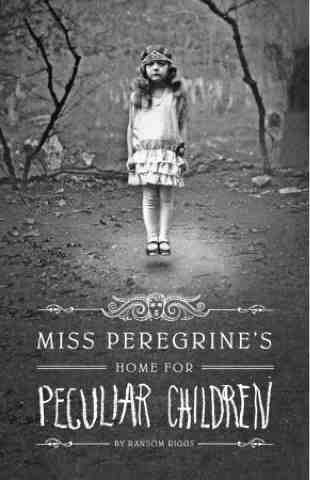
Miss Peregrine's Home for Peculiar Children


Thanks Helen Corbett for recommending this to me.  I ordered it from the library and have devoured it in less than a week.  What fun it was and it's put me in a really good mood. (Two fun and mental books in a row!) This book had to be read in print format because it was full of the most weird and bizarre old photos, which had been lovingly collected and cared for by the author and others.
They are really odd and freaky pictures which the author uses to add atmosphere and a cinematic edge to his completely bonkers story.  The pictures themselves are totally bizarre but make complete sense when you enter into the kind of X-men world off this unknown (made up?) island off the coast of Wales.
The American teenage hero witnesses the murder of his Grandad and vows to travel to the Children's home on a far flung Welsh Island to find out the history and reason behind his Grandad's interesting life and violent death.
This book is American, and the first part is set in Florida, I loved the descriptions of life on a housing estate for a teenager in downtown Miami. I especially liked his descriptions of the multi ethnic  Santas on his neighbours roof! 
The jump to village life in Wales is  a really off the wall shift but it works.  I loved it. I  haven't whipped through a book so quickly in ages! It is written for a teenage audience but even so parts of it are pretty grim.  You do need a strong stomach.  (Especially when you see the kid in action whose specific peculiarity is bringing dead people back to life by inserting fresh cow and sheep hearts into their cadavers! ) Parts of it reminded me of an American Werewolf in London, other bits were X-men, other bits a bit Enid Blyton'! . But the story itself was really inventive and based around a  24 hour time loop stuck on 3rd September 1940, which is accessible from the back of a cave on this weird Welsh Island. All of the kids are safely cocooned within this time loop, lovely reset every evening by Miss Peregrine, who is a woman who can change to a peregrine falcon. 
I loved this guy's writing style.  It was really good fun and totally and absolutely off the wall! OK , it's written for teenagers but hey, no worries that's what I still am at heart and it instantly took me back to the feeling I got when I sucked up books like a hoover when I was 13.


Monday, 13 May 2013

Nights at the Circus

Oh my God, what a ridiculous, bonkers, clever, funny, wonderful book.  YES, I loved it and it's definitely my book of the year so far. Angela Carter writes like a maniac on psychedelic drugs and often just reading her sentences is like tripping out in a linguistic circus.   But hey, I liked that and it didn't bother me that sometimes I didn't understand everything.   In fact the end is so crazy I don't think you are meant to understand it!
Reading this was great fun.  the characters are amazing and their adventures are outrageous.
A woman called  Fevvers  (feathers in cockney) tells a young American journalist about how she ended up being the greatest aerialist at the end of the 19th century.  She was born with wings, abandoned andbought up in a brothel, after this she was sold to a museum of curiosities run by a hideous skeletal woman. She finally ends up joining the circus and despite being more than 6 foot tall  and massive (with wings)  she becomes the sensation of the moment.
The journalist wants to get to the bottom of how she has 'conned' the nation but instead he ends up falling for her charms and becomes besotted with her.
Her circus is planning a tour across, Siberia and into Japan so the journalist gets a position incognito as a rather crap clown.  He secretly writes newspaper articles and lives in poverty with the other clowns and some peasants whilst Fevvers lives the high life in five star hotels. The book is full of totally crazy characters: Educated apes who can write and draw up plans of their evening shows. (They are also desperate to gain their freedom from the circus.)   A psychic pig  from Texas who can predict the future.  A mad Count who wants to entrap Fevvers and force her to live as a toy in his mansion. An evil female prison warden who has the most cruel and vile prison for female murderers ever imagined. Shamens and outlaws from the depths of Siberia, Italian suffragettes and of course manically depressed clowns.

I know that Angela Carter studied English for years and years  and was HUGELY 'clever' and 'literary' and that there are lots of supposed messages in this book but to be honest I didn't really get it on that level and read it as an enjoyable mad story.  The only bit that did confuse me was the end...but hey, maybe when I read it again I'll understand it!

What I loved the most about this book is her openness about human characters. She's harsh on both sexes and is honest about how good and also how cruel humans can be to each other. I got a great sense of how much she must have enjoyed writing this book.  It was a bit like reading an improved version of Alice's Adventures in Wonderland.

Sunday, 28 April 2013

Mister Pip

I finished this a few days ago and I've been a bit stumped about what to write...here goes!
    It's set on an Island called Bougainville.  (I found out it's a real place, an Island in Papua New Guinea...near Australia.)  It's told from the point of view of a 14 year old girl, who's living through a terrible civil war in the 1990s.  As a reader we never really get to know what the war is about. The only white guy on the Island ends up being the village teacher and reading them Dicken's Great Expectations.  This book takes the kids away and opens up their imaginations and they all suddenly realise about the power of dreams.  I'm glad I have read Great Expectations, otherwise this book would have been a real chore.At first the book is quite dream like, almost fluffy in its style  with lots of descriptions of people staring into space and thinking a lot....I wouldn't have minded all this staring and thinking  if the author had given the reader a  slight indication of what the HELL they all were thinking about and staring at.  I just don't think the author was able to successfully get into the character of being a 14 year old girl because when the tone changed and the  extreme violence kicked in, it all just left me cold really. I didn't really care because not one of the characters seemed real to me at all. This Lloyd Jones guy  might have transported his main character successfully into the grimy world of Dicken's England but he totally failed in taking me to the tropical island of Bougainville.
It's a shame really because I really wanted to like this book. The idea behind the story was great but I just think this writer was  trying too hard to be all 'intellectual' and 'write clever stuff' and failed miserably. Terrible things happening to characters in books only work if they are people that you believe in and this was a sham.  To be honest I'm quite angry that the violence left me feeling just slightly sick.
The best thing about this book was the rather beautiful cover.