Sunday, 23 August 2015

Lost In a Good Book


What a great read. This book is bonkers, bonkers, bonkers. Even maybe a little too bonkers because in each chapter so much happens and my brain was just constantly being fried. The parallel universe of 1985 becomes even more craz y in my second adventure with Miss Next as she realises that she is pregnant by her husband who is suddenly eliminated from the world and all conscious memory ( apart from hers) when the Goliath World Dominating Company black mail her into releasing Jack Schitt from his eternal damnation and hell like existence from within the confines of the pages of Edgar Allen Poe's
The Raven. 
Just writing this weird nonsense above makes me feel strange. I can't write about this book successfully because it is all so crazy and wonderfully insane! Thursday Next realises she has a special talent for book jumping and she can literally move into the pages of novels when  she reads them aloud. She ends up in Great Expectations and Miss Haversham becomes her book jumping or rather 'jurisfiction' guide. ( top notch book jumpers can move from book to book without the need to re-enter reality.)  Miss Haversham teaches her a lot and even Miss H  manages to jump into this real parallel world of Swindon in 1985 in order to buy books at a pound sale and drive fast cars (because Miss Haversham is a demon car racer at heart.)   Thursday Next then learns more tricks from the book librarian, the Cheshire Cat. I loved the surreal world of the eternal book library, to me it was like the Bodleian Library personified, because every book was a living breathing entity.  Thursday Next then deals with characters from books posing as humans, she also ends up trapped in the world of written washing labels on clothes and then simply travels through the centre of the world in a gravitube in 40 mins to Japan.  ( There are no aeroplanes in this parallel existence!) it's all so mad it sounds ridiculous..which it is but I LOVED IT and didn't want it to end.
I especially loved the time warps and bits on coincidences when all probabilities and coincidences merge at one point. The bits on time travel were weird but still fun and the characters who only speak through footnotes were bonkers too.
This book is not for everyone. But hey give it a go if you are a complete freak who would also appreciate   Neanderthals, mammoths and dodos being reintroduced on our planet and Wales to be a Socialist Republic and also if you are someone who literally likes getting lost in a good book!
Great fun! 

Sunday, 9 August 2015

Our Man in Havana


I had to read this for my book club and with great trepidation I started it on Friday and finished it today. Not too bad, over quickly! Infact I have never been a Graham Greene fan. Fusty, boring and old fashioned in my opinion. I have never been able to get past page 10 in previous novels I have tried to read. All this spy/thriller shite with cobwebbed men slinking about drinking whisky leaves me cold. Well I DID read all of this and I have to say..not bad. 6/10 but not something I can rave about. 
It's meant to be funny...I didn't get half of the jokes. It's meant to be a spoof spy and I got that. It's meant to be thrilling, well in my opinion it wasn't that thrilling. Infact Greene is supposed to be one of the best writers of the 20 th century. Well, for me he reads more like an Enid Blyton for adults. Simple, spare, modern writing seems more like a script for a play to me with people talking to each other like robots. I then get confused about which character is actually speaking as there are no references. It's just a style of writing that I'm not used to and don't like.
The spoof part I did enjoy. The British Secret service comes across as so ridiculous that they employ an English vacuum sales man (an expat living in Cuba, for over twenty years ) to spy for them. He obviously knows no spies and no massive plots to overthrow the Americans but he wants the money for his Kim Kardashianesque, Pony loving, Virtuous Catholic yet also an implied tart, 16 year old daughter. He makes up stories about spies and draws copies of his vacuum parts and makes them out to be secret weapons being built by the communists in the mountains. All mad and funny but then people really do start to die and Mr. vacumn seller gets involved in more than he can chew. ( this part of the story I loved as it made me think of our government's response to Weapons of mass destruction in Iraq. Were these just drawings of enlarged hoover parts too?!   I think so! )This book was written in 1958 though, well before and also a year before Castro came to power.
This book revolves around a sad,squirrel like, dried up old expat racist trying to earn a few extra bucks whilst spending most of his time in his mans club drinking whisky and daiquiri with his German chum and  deceiving MI6.
I know I probably didn't 'get it' and I'm not intelligent for the 'humour' but I didn't like any of the characters, apart from the fascist policeman with his human skin cigar case. But hey, he was a great James Bond villain. The love story was rubbish ( like a teenage boy writing a love story for homework.) The sexism and racism I could accept, because that's how these important novelists wrote but the whole story was rather sordid and unpleasant. It was redeemed by one scene through... Draughts played with tiny bottles of whisky and bourbon instead of pieces. So when you take a piece you have to neck the miniature bottle. I liked this idea because it meant the better player would get drunk quicker and then lose his powers of concentration. The players were weasel Wormold ( vacuum seller man) and my favourite character, the James Bond villain. I loved him trying to win, stay in control and then finally get totally plastered! 

Thursday, 6 August 2015

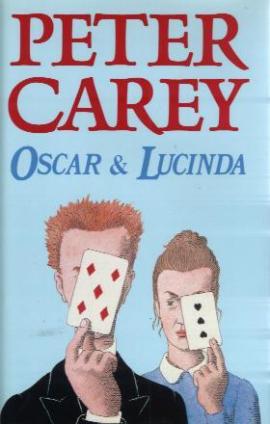
Oscar and Lucinda

phew, what a book. Such a weird one.  It took me an age to read and in the middle I got that 'walking through treacle' feeling but ultimately it's a book I absolutely loved!  A strange one that I can't really put into words because parts of it were pretty tough to get through whereas other parts were brilliant to read.  Carey is an amazing writer who just takes you on a roller coaster ride.  Both Oscar and Lucinda were born a century too early.  If they had been born 100 years later they would have got together in Las Vegas, made a fortune in the dot coms of silicon valley and then settled down to a life of farming,  all night card games for pennies, household chores and true love.  This was what was so sad and frustrating about their love for each other, the fact that the restrictions of their uptight Victorian lifestyle kept them apart and kept them from understanding each others true feelings. it was so infuriating (as bad as Remains of the Day, another book I loved.)
I also enjoyed the harsh portrayal of life in Sydney.  This was a life full of people with no redeeming features.The landscape is harsh, the people are harsh and even the rivers are full of menace. I loved it. But the way Carey writes is so brutally funny.  He doesn't do sentimentality but some of his sentences are truly beautiful. He just seems to cut through all the crap and get to the heart of things.
I also liked how he described his characters.  His descriptions were so good it's like they were all in 3D, right in front of you and Victorian life was going on right in front of you too.  Scenes from this book will stay with me for ever. Especially the boat crossing from London to Sydney and Oscar's life with his strict father in Devon.
My favourite part of the book was the beginning and how Oscar and Lucinda 's lifestyles built up to their independent expressions of their gambling addictions.  Both had such different upbringings but the joy they got from the 'logic' or 'peace'  of a good card game or a great run at the races was really well described. I especially enjoyed how both of them enjoyed losing just as much as winning. This last feature of their gambling addiction came into true focus by the end of the book and it was just so sad I had to stop reading it 50 pages before the end and have only just finished it off today. the ending was weird.  Almost like Peter carey was suffering from an author ending frenzy.   It was very different from the rest of the book...but hey, that's why I like this author. He's full of surprises. I'm sure when I read it again it will be a completely different book!

Monday, 13 July 2015

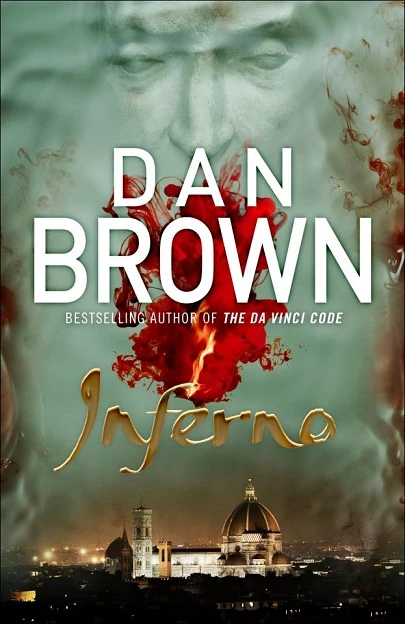
Inferno


This has been bloody painful reading.  I was looking forward to reading it because I found the Da Vinci Code a really fun page-turner but this was just dull, stupid and annoying.
Yes, yes, yes, I know I should have stopped reading it and given it away but I kept on believing that it would get better and it never did. What a waste of my time and such a heavy book to carry around in my bag for the last few weeks. It ended up being just a rather naff tourist guide to Florence and Venice with a bit of mad cap charging around Istanbul at the end. Infact I finished it this morning and just 8 hours later I have forgotten it and don't really know what to write about the plot. One good thing though Dante's Inferno looks like an interesting, gory read. It's made me think I should give that a go!

Tuesday, 30 June 2015

The Eyre Affair


A book I would never have read or even heard of if it weren't for my book club. And well I loved it. What a great read. Really good fun, full of imagination and a great story. What more could you want from a book?! 
I don't even know how to write about it. It's set in a parallel reality in 1985 in a secretive government department in Swindon. It's a Britain where Wales is an unfriendly breakaway Republic, the Crimean war has been raging for over 150 years and extinct animals can be bought back to life. People can also time travel and also portal into the pages of classic novels and chat to the characters and change the plots for ever. Infact books, plays and literature are the number one pastime of people. Books are the beating heart of this society and the evil Mr. Hades has decided to take Jane Eyre hostage for a ransom of a billion pounds.
Miss Next is the full on Swindonian heroine of the novel and she sure kicks arse with her time travelling car, her first edition of Jane Eyre in her pocket and her old friend Mr Rochester who can also magically portal in the other direction out of the novel to help her in times of need. Infact in this reality Jane Eyre has a different ending and Mr Rochester is totally heart broken that Jane marries St. John Rivers. So Miss Next goes out of her way to help change Mr Rochester and Jane's destiny.
Yes, it all sounds completely mad and in many ways it truely is bonkers but I loved it. I think having read Jane Eyre is a must and having a copy comes in handy. The only thing I didn't like were the dumb names. Here I just think Jasper Fforde went a bit over the top and I don't think I understood all the little in jokes. OK, Jack Schitt was obviously a baddie, but why the main character was called Thursday Next, I don't know. I just found it irritating. I understood the character of Oswald Mandias but that's only because I checked out Ozymandias on line after watching an episode of Breaking Bad. So yeah, I can kind of see why the novel has gained a cult following. But hey, me too! I loved it, loved it, loved it. Pure brilliant, geeky barminess with great use of language. Get a copy.( Sorry mine is not going to be lent out.  I will read it again when I'm feeling glum and in need of a laugh! )

Tuesday, 23 June 2015

Blood and Beauty


This book was really enjoyable. But I'm glad that I don't have to lug the enormous hardback copy I had around with me any more. (It was another 9p bargain from 'Help' the Aged.)
I have never watched anything  about the Borgia family of Rome on TV because I don't have Sky but after this read I feel like I know a damn lot. I have been transported into the corrupt Vatican of the late 15th century and I loved it all. Everyone there was a political, selfish tyrant using the power of God, (trademark) and warfare to gain more land, more political support, more power and more money. Reading about the war plans was like being inside the head of a despot. Loyalties constantly were shifting between the houses which ruled the independent states of Italy, the most powerful States for the Borgias of Rome, being Naples and Milan.   The Borgias were constantly at war with  their neighbours with a bit of French and German interference thrown in to help and hinder. Not forgetting of course that Alexander Borgia, the Pope, was actually a Spanish guy, so even Spanish mercenaries were shipped over too.
Game of Thrones must have been based a bit on this family and their outrageous ways. There was a rumour that the son and daughter of Pope Alexander had an incestuous love affair but Sarah Dunant disagrees and in this book the local people just gossip about them. Also the oldest son of the pope might have killed the youngest son but again Dunant reserves judgement and the murderer is never found.   I actually liked the outrageous pope and his beautiful daughter, Lucrezia, who is just a political pawn who the pope marries off three times at his whim, destroying her previous husbands when they become enemies. I also liked Cesare, her brother, but what a bad, bad man!!!  Watching him change from a handsome young lad full of life , to a man who only wears black and a mask because of his facial pock marks from getting the new 'french' disease of syphillis was fascinating. Yes, a good read. Sarah Dunant wrote really well, making it all seem quite modern and also quite funny. A much better historical novel than that tedious Wolf Hall! 

Sunday, 31 May 2015

Women in England

I bought this book years ago from a charity shop and to be honest it never really appealed to me. Maybe the title and the ugly book cover put me off, but last month I finally picked it up and I have been mesmerised ever since. most evenings I just dipped into it and I found it fascinating. It's weird I never studied history past the age of 13 at school but it's something I find more and more fascinating as I get older. Anyway this was social history at it's best and all from a woman's perspective. Lots of topics were put into context. How different classes of woman lived and worked. I particularly enjoyed the working class section ,of which over 75% of women belonged to in the 19th century. All women were industrious at doing piecework and running their own businesses from their homes, but everything was recorded as money earned by their husbands. My god, their lives were hard. Running the house, toiling from sunrise to sunset, doing hourly paid work when you could, looking after the kids, being constantly pregnant, not being able to say no to your husband when he wants sex,   The industrial revolution bought lots of changes, where children and women, were treated as cheap slave labour.  Unmarried women were often given boring , laborious tasks and men were often given more interesting work. This resulted in women often having different entrances and departments in jobs so they couldn't actually see what men did ( this carried on in the post office until the 1950s!) as soon as women married they were ordered to leave their jobs and women in service to the gentry had to remain single. 
The section on sex and sexuality was really interesting. Premarital sex before 1760 wasn't really looked down on at all and lots of women got married pregnant as people were far less judgemental.  but after this time more and more women got jilted as people were beginning to live away from their families and they didnt have to live under the watchful eyes of their families anymore. 
English law codified what 'full sex 'actually meant in the 18th century.( before this time I think anything was permissible!!)  From this time adultery in the eyes of the law had to be full sex with a person of the opposite sex.  Penetrative sex was now seen as the only ' correct' way and I believe after this time English society became far more prudish and the rights of women became less as society became far more judgemental and less pragmatic. After this time being single or celibate or married without kids was looked down on and the result was a huge population boom and lots more vulnerable women.
 The word lesbian didn't even exist at this time and there are no real historical records of lesbians because it wasn't a crime , but even so many women lived happily with other women and they were often just left in peace. Lots of men died in wars during this time so the over spill of too many 'independent' minded woman was smoothed over by not minding if women lived together, but these women had to be rich and financially capable of not needing a husband.  Lots of middle class women at this time( both lesbian and straight I presume!)  often went to the colonies at this time too because of the lack of appropriate husbands here. True independent travel for women was born!  
The section on religion was all about how women's political roles were filled by belonging to a church. And my god, lots of churchs were created in England at this time!!  Far more women than men went to church and this was how women could really get involved with local and worldwide issues. Many women were involved in fighting against workhouses, Jamaican slave holdings and Indian women living in purdah through belonging to a church. Church was often a legitimate way for women to feel involved in the society and it really made me rethink what the role of churches played in women's lives then. 
The fear of syphilis and VD was rife at this time. Nearly a half of all soldiers had a sexual disease. The clean streets act resulted in all prostitutes in England having to be subjected to violating checks by the police and doctors. Unlike other European countries the majority of prostitutes here were self employed(no madam or huge brothel to protect them/control them.) 
  The Poor Law Acts of the 1830 s really took the country backwards for about 15 years. Lots of vulnerable and poor women were picked off the streets and dumped in workhouses. The government stopped giving money to local authorities to fund poverty on a local level and money was centralised around workhouses. Here all your dignity was stripped away and husbands, wives and children were separated and lived a life of abject poverty and fear. The word 'undeserving poor' had been invented and the country turned into a place of even more fear, crime and corruption until the reform acts later in the century. 
The sections on education and suffrage were also brilliant. An interesting fact I learnt was that some educated middle class women hated it when working class men got the vote before them. They got involved with voting rights after this law was passed. They weren't really that bothered about voting rights for all women, just that farm labourers and uneducated men shouldn't be treated better than them!  Women were often more entrenched in their class than fighting for their rights as women. 
Infact the whole book was a complete gem and I recommend it, (if you are into this kind of thing. ) It was never dull, really well written, easy to follow and very interesting It made me realise that women have not just been passive victims or spectators in history but true players. It is just that their voices are more likely to get lost in the passage of time.